
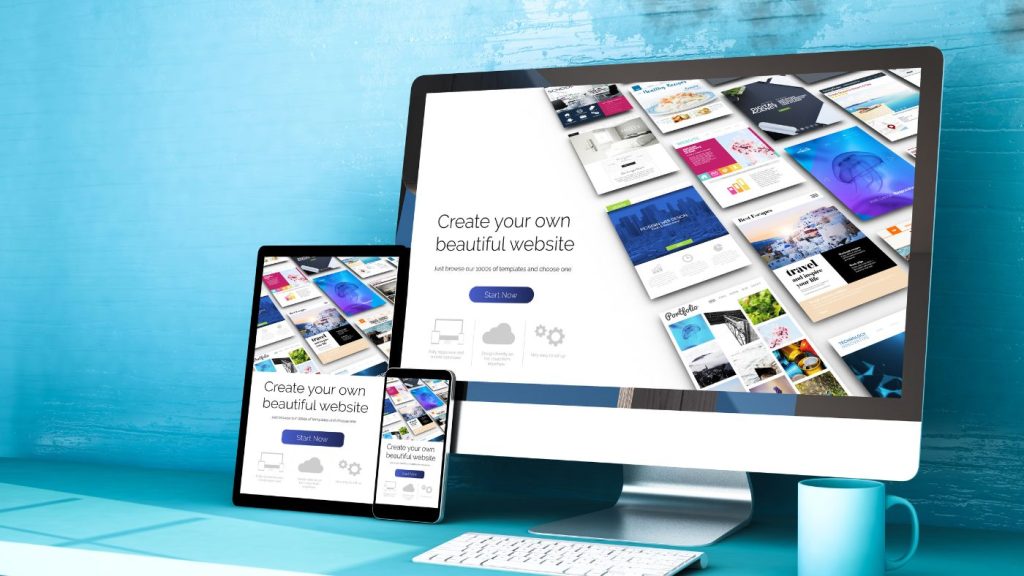
So you’re ready to establish or upgrade your business’s online presence. That’s exciting! But then comes the big question that stops many small business owners in their tracks: should you build your website using a DIY platform like Wix or Squarespace, or invest in a custom website built by professionals?
It’s a legitimate dilemma. On one hand, website builders promise ease and affordability. On the other, custom websites offer flexibility and uniqueness. The truth is, there’s no universal “right” answer—but there is a smart choice for your specific business situation.
Let’s break down everything you need to know about the custom website or builder decision so you can move forward with confidence.
Understanding Website Builders: The DIY Approach
Website builders have revolutionized how businesses get online. Platforms like Wix, Squarespace, Weebly, and WordPress.com offer drag-and-drop interfaces that let you create a website without writing a single line of code.
The Advantages of Website Builders
Lower Initial Investment The most obvious benefit is cost. Most website builders offer plans ranging from $15 to $50 per month, which includes hosting, basic templates, and support. For a brand-new business watching every dollar, this accessibility is appealing.
Quick Launch Timeline With pre-designed templates and intuitive interfaces, you can potentially have a basic website live in a matter of days—or even hours if you’re determined. When speed matters more than perfection, builders deliver.
No Technical Expertise Required You don’t need to understand HTML, CSS, or JavaScript. If you can use basic computer software, you can build a website. This democratization of web development has empowered countless entrepreneurs to establish their online presence independently.
Built-in Maintenance and Security The platform handles technical maintenance, security updates, and hosting infrastructure. You won’t need to worry about software patches or server configurations—it’s all managed for you.
The Limitations of Website Builders
But here’s where things get complicated. While website builders work well for certain situations, they come with significant constraints that can hinder your business growth.
Template Limitations and “Cookie-Cutter” Appearance You’re working within predetermined templates that thousands of other businesses are also using. Sure, you can customize colors and images, but the underlying structure remains the same. Your website might look suspiciously similar to your competitor’s—or worse, to businesses in completely different industries.
Restricted Functionality and Customization Want a specific feature that isn’t available in the builder’s marketplace? Too bad. Need to integrate with a particular business software? Hope it’s supported. Website builders offer what they offer, and customization beyond their ecosystem ranges from difficult to impossible.
SEO Challenges While website builders have improved their SEO capabilities over the years, they still impose limitations that can impact your search rankings. You have less control over technical SEO elements, site speed optimization, and advanced schema markup that help search engines understand and rank your content.
Scalability Concerns As your business grows, your website needs evolve. That simple five-page site might need to become a robust platform with advanced functionality, custom integrations, and sophisticated user experiences. Many businesses eventually “outgrow” their website builder and face the costly prospect of starting over from scratch.
Long-term Cost Considerations Those monthly fees seem small initially, but they add up. Over five years, a $30/month plan costs $1,800—and that’s assuming the price doesn’t increase. Plus, you’re essentially renting your website. Stop paying, and your site disappears. You never truly own it.
Limited Loading Speed and Performance Website builders load a lot of unnecessary code to accommodate all their features and flexibility. This bloated codebase can result in slower page speeds, which impacts both user experience and search engine rankings.
Understanding Custom Websites: The Professional Approach
A custom website is built specifically for your business by web developers and designers. Rather than fitting your business into a predetermined template, the website is crafted around your unique needs, brand, and goals.
The Advantages of Custom Websites
Unique Brand Expression Your custom website or builder choice ultimately comes down to brand differentiation. With a custom approach, every element—from layout and design to functionality and user experience—is tailored to your specific brand identity. You stand out rather than blend in.
Unlimited Functionality and Flexibility Need a specialized booking system? Custom member portal? Unique product configurator? Integration with your specific CRM or inventory management system? With custom development, if you can imagine it, it can be built. You’re not constrained by platform limitations.
Superior SEO Performance Custom websites can be optimized for search engines from the ground up. Developers can implement advanced technical SEO strategies, optimize code for speed, structure content strategically, and integrate sophisticated schema markup that helps your pages rank higher in search results.
Better Performance and Speed Without the bloat of unnecessary code that website builders carry, custom sites can be significantly faster. Every line of code serves a purpose. This improved performance enhances user experience and supports better conversion rates.
True Ownership You own your website completely—the code, the design, the content, everything. You’re not dependent on a platform’s continued existence or policies. Your site can be hosted anywhere, moved if needed, and modified by any qualified developer.
Scalability Built In Custom websites can be architected with growth in mind. As your business expands and your needs evolve, your site can evolve with you through updates and additions rather than requiring a complete rebuild.
Enhanced Security Options With custom development, you can implement enterprise-level security measures tailored to your specific needs rather than relying on a one-size-fits-all platform approach.
The Considerations with Custom Websites
Custom development isn’t without its considerations. Being realistic about these helps set appropriate expectations.
Higher Initial Investment Custom website development typically starts at $5,000 to $15,000 for small business sites, with more complex projects running significantly higher. This represents a substantial upfront investment compared to website builders.
Longer Development Timeline Creating a custom website takes time—typically 6 to 12 weeks for a professional small business site. Strategy, design, development, and testing all require time to do properly.
Requires Professional Partnership You’ll need to work with experienced web developers and designers. Finding the right partner and managing that relationship adds a layer of complexity compared to the DIY builder approach.
Ongoing Maintenance Responsibility While you have more control, you also have more responsibility. Software updates, security patches, and technical maintenance need to be managed—either by you with technical knowledge or through a maintenance partnership.
Making the Smart Choice: Key Decision Factors
Now that we understand both options, let’s examine the factors that should drive your custom website or builder decision.
Your Business Stage and Goals
Just Starting Out or Testing an Idea? If you’re validating a business concept or just establishing initial online presence, a website builder might make sense as a starting point. The low barrier to entry lets you get online quickly while you determine if the business has legs.
Established and Growing? If you’re past the startup phase and building a sustainable business, a custom website becomes a strategic investment in your growth infrastructure. It signals professionalism and provides the foundation for scaling.
Planning Significant Growth? If you have ambitious growth plans, start with custom development. Outgrowing a builder platform and migrating later is more expensive and disruptive than building properly from the start.
Your Budget Reality
Be honest about your financial situation. If $10,000 for a custom website would strain your business to the breaking point, that’s important to acknowledge. However, also consider the opportunity cost. A mediocre website that doesn’t convert visitors or rank in search results isn’t saving you money—it’s costing you potential revenue.
Many businesses find that a phased approach works well: start with a strategically designed custom site with core functionality, then add features and capabilities as revenue grows.
Your Technical Comfort Level
Are you comfortable troubleshooting technical issues, learning platform quirks, and spending time on website management? Or would you rather focus on running your business while professionals handle your digital presence?
Website builders require ongoing time investment to maintain and update. Custom websites with professional maintenance partnerships minimize your time involvement.
Your Competitive Landscape
Research your competitors’ websites. If everyone in your industry uses generic templates, a custom website gives you immediate competitive advantage. If your competitors have sophisticated custom sites, you’ll struggle to compete with a basic builder template.
Your website is often your first impression. Make sure it positions you where you want to be in your market.
Your Specific Functionality Needs
List out everything you need your website to do—not just now, but within the next 2-3 years. Does your list include standard features like contact forms and photo galleries? A builder might work. Does it include custom calculators, advanced booking systems, member portals, or specialized integrations? You need custom development.
Your Brand Importance
How important is brand differentiation to your business model? If you’re competing primarily on price in a commoditized market, your website might be less critical. If your brand, positioning, and customer experience drive your business value, your website needs to reflect that uniqueness—and a template won’t cut it.
The Hybrid Approach: When It Makes Sense
Some businesses successfully use a hybrid approach, particularly in specific situations:
WordPress as a Middle Ground A self-hosted WordPress site offers more flexibility than pure website builders while maintaining some DIY accessibility. With thousands of plugins and themes, plus the ability to add custom code, WordPress can bridge the gap—though it still requires more technical knowledge than platforms like Wix.
Builder for Testing, Custom for Scaling Some businesses start with a builder to validate their concept and initial market, then transition to a custom website once they’ve proven the business model and have revenue to invest in professional development.
Custom Primary Site with Builder Landing Pages Some businesses maintain their main custom website while using builder platforms for quick-turnaround landing pages for specific campaigns or tests.
The Real Cost Comparison
Let’s look at realistic costs over a five-year period:
Website Builder Path:
- Monthly subscription: $30 x 60 months = $1,800
- Premium apps/plugins: ~$500
- Paid template: $200
- Your time learning and managing: $2,000-5,000 (valued conservatively)
- Total: $4,500-7,500
Custom Website Path:
- Initial development: $8,000-15,000
- Annual hosting and maintenance: $500-1,500 x 5 years = $2,500-7,500
- Updates and additions as needed: $1,000-3,000
- Total: $11,500-25,500
The custom website costs more upfront, but consider what you get for that investment: professional design, optimized performance, unique functionality, better SEO, higher conversion rates, and a scalable platform that grows with your business.
If your custom website generates even a few additional customers per month through better conversion rates and SEO performance, it pays for itself quickly.
Questions to Ask Before Deciding
Still uncertain about your custom website or builder choice? Ask yourself these questions:
- What is my website’s primary purpose? (Credibility? Lead generation? E-commerce? Information?)
- How important is my website to my overall business success?
- What is my realistic budget for initial investment and ongoing costs?
- How much time can I personally dedicate to website management?
- What specific functionality do I need now and within 2 years?
- How important is brand differentiation in my market?
- Do I have technical skills or access to technical support?
- What are my growth plans for the next 3-5 years?
Your answers will point you toward the right choice for your situation.
Our Recommendation: Think Long-term
After working with hundreds of small businesses on their digital presence, here’s our honest perspective: if your business is serious and you’re committed to growth, invest in a custom website from the start.
Yes, it costs more initially. But it’s infrastructure—a foundational business asset that supports your growth rather than constraining it. The businesses we see thriving online almost universally have professional custom websites that reflect their brand, convert visitors effectively, and adapt as they grow.
Website builders serve a purpose for hobby projects, temporary sites, or initial concept testing. But for established small businesses building something lasting, custom development is the smart choice—not because it’s more expensive, but because it’s more effective.
Your website is too important to your business success to settle for a template that thousands of others are using. It’s your 24/7 salesperson, your credibility builder, your lead generator. Invest in making it exceptional.
Ready to Make Your Decision?
Whether you choose the custom website or builder path depends on your unique situation. But don’t let decision paralysis keep you from moving forward. An imperfect website today is better than a perfect website “someday.”
If you’re leaning toward a custom website but want strategic guidance on exactly what you need and how to approach it, we’d be happy to help. At PowerFast Digital, we specialize in helping small businesses navigate these decisions and build digital presences that actually drive growth.
We start every partnership with a complimentary strategy session where we dive deep into your business, goals, and challenges. You’ll walk away with a clear roadmap for your digital presence—whether you work with us or not.
Schedule your free strategy session or Contact Us and let’s determine the smart choice for your business together.
Your digital presence is too important to get wrong. Let’s make sure you get it right from the start.