Let’s cut through the noise: your business is probably leaking money right now because you’re trying to use 20th-century human limitations to solve 21st-century digital problems.
I’ve watched small business owners burn themselves out trying to be "available" 24/7. I’ve seen them lose high-value leads at 2:00 AM because a potential customer had one simple question and nobody was there to answer it.
Here is the truth: Your customers don't care about your sleep schedule. They don't care that you’re understaffed. They want answers now. If they don't get them, they’re clicking "back" and heading straight to your competitor.
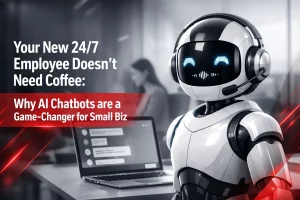
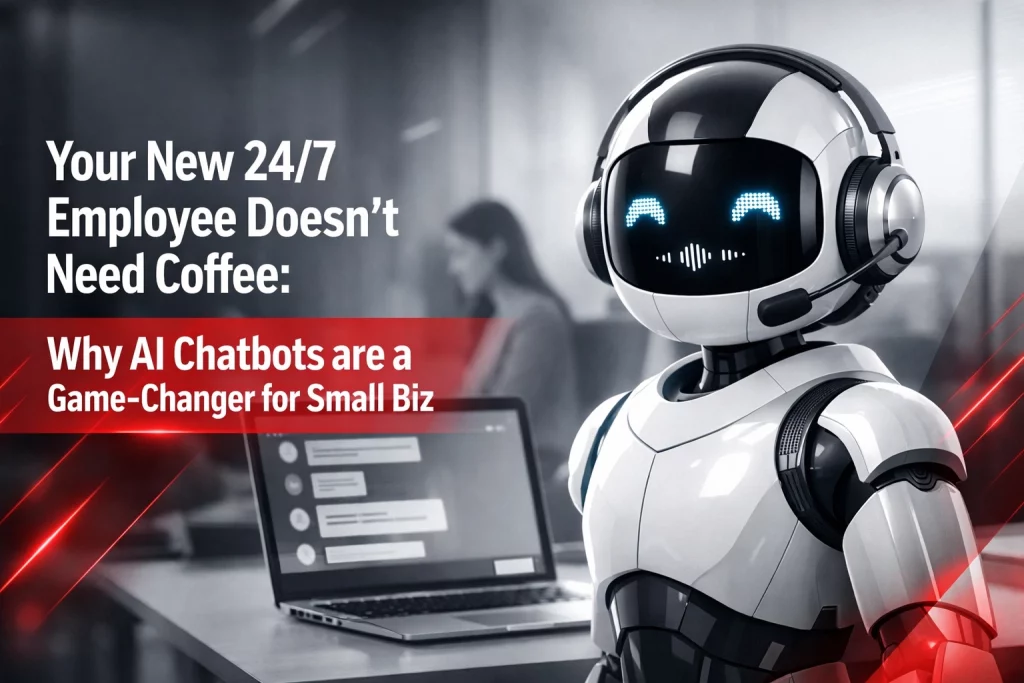
That’s where ai chatbots for business come in. And no, I’m not talking about those clunky, "I don't understand that command" boxes from five years ago that made everyone want to throw their laptop out a window. I’m talking about sophisticated, generative AI that acts as your most efficient, most polite, and most caffeinated employee, minus the actual coffee.
The Brutal Reality of the "Human-Only" Model
Let’s do some quick math, the kind that keeps you up at night. To have a human monitoring your site 24/7, you’re looking at at least three shifts. Even at a modest $15–$20 an hour, you’re burning through thousands of dollars a month just to have someone sit there and wait for a ping.
Most small businesses can't afford that. So, what do they do instead? They ignore the "after-hours" traffic.
That is a massive mistake.

I’ve seen data suggesting that upwards of 60-80% of routine inquiries are the same five questions. "What are your hours?" "Do you have this in stock?" "Where is my order?"
When you pay a human to answer those, you’re not paying for talent; you’re paying for a search engine with a pulse. It’s a waste of their time and your money. AI handles those repetitive tasks instantly, freeing up your actual team to do the "high-value" work that actually requires a human brain.
Conversion Optimization: The 2 AM Lead Magnet
Let’s talk about conversion optimization. Most people think of this as changing button colors or shortening forms. They’re wrong. True conversion optimization is about removing friction.
When a visitor is on your site at midnight, they are in a high-intent state. They are ready to engage. If your site is just a static brochure, you’re hoping they’ll remember to come back tomorrow or fill out a contact form and wait 24 hours for a reply.
Spoiler alert: They won’t.
A chatbot turns your website from a digital flyer into a two-way conversation. It qualifies the lead, answers the objection, and moves them down the funnel while you’re dead to the world.
If you're still making common website mistakes costing you customers, a chatbot is the fastest way to patch the holes in your bucket.
The Honest Investment Breakdown: What It Actually Costs
What the "AI evangelists" won't tell you is that a "free" chatbot is usually garbage. If you want something that actually represents your brand well, you need to look at the real numbers.
- Platform Fees: $50 – $300/month for a solid, small-business-tier AI platform.
- Setup Time: 10–20 hours minimum to "train" the bot on your specific data, FAQs, and brand tone.
- Maintenance: 2–3 hours a month to review logs and tweak responses.
Compare that to a $35k–$50k salary plus benefits.
The breakeven point? Usually about 14 days. If your bot captures just one or two decent leads that you would have otherwise missed, the entire year is paid for. It’s not magic; it’s just better math.
What Nobody Tells You About "Simple" AI
I’m going to be brutally honest here: AI is only as smart as the person who sets it up.
If you just slap a generic bot on your site and tell it "Go sell things," it’s going to hallucinate. It’s going to tell people you’re giving away free products or that your business is located on the moon.
I've watched businesses fail at this because they treated AI like a "set it and forget it" tool. It’s not. It’s a "set it, test it, refine it, then let it run" tool. You need to feed it your actual data, your price sheets, your service descriptions, and your essential website pages.

The "Skip It If" Section
Don't buy into the hype if:
- Your traffic is non-existent. A chatbot can't talk to ghosts. If you don't have people hitting your site, a bot is just a digital paperweight. You need to fix your local SEO first.
- Your product is hyper-complex and emotional. If you’re a divorce lawyer or a high-end estate planner, people want a human voice immediately. A bot can book the call, but don't let it try to handle the empathy. It's not there yet.
Beyond Customer Service: The Stealth Salesman
The real power of ai chatbots for business in 2026 isn't just answering questions, it's proactive engagement.
Imagine a user has been looking at your pricing page for three minutes. A human would never know that in real-time. A chatbot does. It can pop up and say, "Hey, I noticed you’re checking out our Premium Plan. Do you want to see a quick 2-minute case study of how it helped a company just like yours?"
That is how you transform your site into a small business marketing automation powerhouse. It's about being in the right place at the right time with the right data.
Why You’re Actually Scared of AI
Let’s address the elephant in the room. You’re worried it will sound "robotic." You’re worried it will annoy people.
The reality? Most customers prefer a bot for simple tasks. They don't want to talk to "Kevin" from support just to find out if you’re open on Labor Day. They want the answer in 2 seconds so they can get on with their lives.
Research shows that 93% of small business owners agree that AI tools offer cost-effective solutions that drive real savings. You aren't "replacing" the human touch; you’re making the human touch more valuable by only using it when it actually matters.

Your 30-Day Roadmap to Implementation
If you’re ready to stop being a slave to your inbox, here is how you actually do this without losing your mind:
- Week 1: Audit Your Inquiries. Look at your last 100 emails and DM's. What are the top 10 questions? That is your bot's "knowledge base."
- Week 2: Pick Your Platform. Don't overcomplicate this. Look for platforms that integrate with your CRM. (Check out our guide on AI tools for small business for recommendations).
- Week 3: The "Sandbox" Phase. Install the bot but keep it hidden. Test it with your team. Try to break it. Ask it stupid questions.
- Week 4: Go Live. Put it on your highest-traffic pages first. Monitor the "hand-off" moments: when the bot realizes it’s out of its league and needs to alert a human.
The Bottom Line
The gap between businesses that use AI and those that "plan to look into it eventually" is widening every single day. While you’re "thinking about it," your competitors are using ChatGPT for small business tasks and deploying bots that are stealing your leads while you sleep.
A chatbot isn't a luxury anymore; it's a defensive necessity. It’s the gatekeeper that keeps the junk out of your inbox and the closer that keeps the hot leads from cooling off.
Stop being the bottleneck in your own business growth. Get a 24/7 employee that doesn't need a lunch break, doesn't need health insurance, and never, ever complains about the "Monday blues."
Is it a learning curve? Yes. Is it worth it? Ask the businesses saving hundreds of billions annually through AI efficiency.
The choice is yours: Adapt or stay exhausted.
If you're ready to build a real digital marketing strategy for 2026, it's time to put the bots to work. 🚀
<BLOG_POST:27f3a4ea-1729-4a03-8886-527d3dc4199c>